L-301 Life & interests
Life & interests.
The plan sheets are only part of the story. This is the rest of it — the friends I’ve talked ball with for 165 episodes, the Best Ball seasons I’ve archived since 2021, the tools I built because my leagues needed them, and the quotes I copied by hand because they changed how I see money, work, engineering, and life. It’s the part of the site I most want to keep adding to.
- The storyThe story indexEvery milestone since 2020, by year.
- ReadingThe quote bank289 handwritten lines that shaped how I think.
- VoicesTwo podcasts165 episodes of NBA talk, and a dynasty league show.
- Games & dataBest Ball, since 2021An archive of seasons, plus the models behind the drafts.
- Built by meAppsDraft the Stars, a bet tracker, and two tools in development.
L-302 Reading & quotes
Lines worth copying by hand.
289 quotes from more than a hundred books, logged since 2020 — one card at a time. Starred ones are favorites. Search, filter by topic or book, or browse the bookshelf they came from.
All 289 quotes, newest first.
“Focusing Illusion: Nothing in life is as important as you think it is, when you are thinking about it.”
- “Focusing Illusion: Nothing in life is as important as you think it is, when you are thinking about it.”
- “Duration Neglect: Counting all positive and negative memories as equal even though the length of positive far outweighs the length of the negative times.”
- “Prospect Theory: Highly unlikely events are either ignored or over-weighted.”
- “People dislike risk. Even if the expected return is lower, if it has less risk they will take it. Most choices are not based on dollar value, but the psychological values of emotion on outcomes. Their 'utility' is based on the history/reference point of wealth, not the possible outcomes.”
- “Planning Fallacy: Tendency to underestimate the amount of time/money it will take to complete a task - even if it contradicts our experiences.”
- “We constantly overestimate the role of skill and underestimate the role of luck.”
- “When given context on a person or occurrence we believe it is more likely than an event or outcome that is less detailed.”
- “Representativeness = associating someone's attributes with a predetermined stereotype.”
- “Representativeness will always overpower logic in all aspects of reasoning.”
- “Anchoring as Priming Effect: Did Gandhi die before or after the age of 30? -> 30 is a young age but why would the number be too far off the actual number... he died at 78.”
- “Anchoring by Adjustment: When was George Washington President? -> You know it had to be after 1776... then adjust.”
- “The world in our heads is not a precise replica of reality.”
- “A dramatic or traumatic event temporarily increases the availability of its category!”
- “Intensity Matching: Allows your brain to compare things that seem they should not be comparable.”
- “All headlines do is satisfy our need for coherence with current events or outcomes.”
- “Cognitive Ease = Familiarity is not easily distinguished from truth”
- “In the economy of ACTION, EFFORT is the cost.”
- “System 1: automatic, quickly, no effort System 2: complex computations, choice, concentration”
- “What are my goals? Who are they? What will it take to persuade them?”
- “Understand the picture in their head.”
- “Every relationship in your life except in your family began as a transaction. Start conversations with people.”
- “How is my value to the company being calculated?”
- “Bargaining Range: The range between the most the buyer will pay and least the seller will accept.”
- “Understand who the other person is, understand his concerns and perceptions, his needs and intangibles. Trade items of unequal value.”
- “The information you collect from others gives you the ability to better meet your goals and fulfill your needs. Remember, it is not about gaining power at the expense of others. You having more does not mean less for the other person. The pie is expanded.”
- “Naming bad behavior without making yourself the issue is powerful because it turns the other party's entire being against them - all the focus is on them.”
- “If you don't know the standards of the other side, you should ask.”
- “Almost everything you say in a negotiation should be a question. Try turning your statements into questions. Questions also give the other party a better chance to participate in the conversation.”
- “False-Consensus Effect: Assuming that everyone else reacts to things the way that you do.”
- “He's not even listening to you until you start where he is.”
- “Trust is a feeling of security that the other person will protect you. With some trust, another person will help you until it's too risky for them or a better opportunity comes along. With a lot of trust, the other party will sometimes help you even if it harms them.”
- “Making a personal connection means you have to focus on other people, not just yourself, bringing them into a conversation with you.”
- “The negotiation process is 55% People, 37% Process, 8% Substance”
- “Everything is Situational: 1. What are my goals? 2. Who are 'they'? 3. What will it take to persuade them?”
- “Small Steps: Don't be greedy If you can increase your success rate by even a few percent in your negotiations with others, you will be fabulously more successful.”
- “You: Your attitude, credibility, transparency Be a problem-solving negotiator Be in a good mood Be 'straight' Ask for criticism”
- “Goals: You negotiate to meet goals. Are my actions meeting my goals?”
- “Negotiation is the process of meeting your goals when dealing with another person: 1. Forcing people to do what you want them to do. 2. Getting people to think what you want them to think. 3. Getting people to perceive what you want them to perceive. 4. Getting people to feel what you want them to feel.”
- “The 'Common Enemy' Tool: Members work together when they face an opponent, although they otherwise have little in common.”
- “Life, like poker, is one long game, and there are going to be a lot of losses, even after making the best bets.”
- “Imagining a successful future and backcasting from there is a useful exercise.”
- “We are more likely to make choices consistent with our long-term goals when we can get out of the moment and engage our past- and future-selves.”
- “Perfect Group Construction: A focus on accuracy, objectivity, and truthseeking Accountability Openness to a diversity of ideas”
- “There are some situations where people aren't seeking the truth.”
- “Thinking in bets is a smart way to start building habits that achieve our long-term goals. It triggers a more open-minded exploration of alternative hypotheses, of reasons supporting conclusions 'opposite' to the routine of self-serving bias.”
- “The systematic errors in the way we field the outcomes of our peers comes at a real cost. We lose compassion for others.”
- “Declaring our uncertainty in our beliefs to others makes us more credible communicators and invites people to be our collaborators.”
- “All decisions are bets.”
- “Thoroughly conscious ignorance is the prelude to every real advancement in science.”
- “Trouble follows when we treat life decisions as if they were chess decisions. Life is like poker. Poker is a game of incomplete information.”
- “I always wondered why somebody didn't do something about that. Then I realized I was somebody.”
- “Focus on the critical few, not the significant many.”
- “Before we build a better mousetrap, we need to find out if there are any mice out there.”
- “Inspiration is a magical thing, a productivity multiplier, a motivator. Inspiration is a now thing. If it grabs you, grab it right back and put it to work.”
- “Sound like You: Think about one person and write for them. Writing for a mob leads to generalizations and missing the mark.”
- “Failing to trust employees can be awfully expensive.”
- “Don't be afraid to give a little away for free. Be confident in what you're offering, and know people will come back for more.”
- “If there's a request that you keep forgetting, that's a sign that it isn't very important. The really important stuff doesn't go away.”
- “Reasons to Quit: Why are you doing this? What problem are you solving? Is this actually useful? Are you adding value? Will this change behavior? Is there an easier way? What could you be doing instead? Is it really worth it?”
- “Focus on what won't change.”
- “Build half a product, not a half-assed product.”
- “A workaholic is not a hero, a hero is already home because they figured out a faster way to get things done.”
- “'That won't work in the real world.' Well, the real world sounds awful, it's filled with pessimistic people who assume society isn't ready for a capable change.”
- “Capacity Building - 'building a strong base that can be added upon rapidly from multiple sources' Find people who are willing to completely restart when a new, more effective/safer method is discovered.”
- “Strategic Analysis - 'crucial consideration' Look for ideas/arguments with the potential to change our views.”
- “We want to focus on problems that are not only important but urgent in the sense that their solutions are needed prior to the intelligence explosion.”
- “If we know how to solve the value-loading problem, how do we decide what values should be loaded? What would we want a superintelligence to want?”
- “Wireheading could be caused from using reward systems in parenting... causing kids to value the wrong things just to achieve the 'pleasure' response.”
- “Wireheading - artificial stimulation of the brain to experience pleasure, through direct stimulation of an individual's brain reward or pleasure center. Also, any kind of method that produces 'counterfeit utility' by producing a good feeling, but that fails to realize what we value.”
- “Rate of change in intelligence = Optimization Power/Recalcitrance.”
- “Three Forms of Superintelligence: 3) QUALITY - A system that is at least as fast as a human mind and vastly qualitatively smarter.”
- “Three Forms of Superintelligence: 2) COLLECTIVE - A system composed of a large number of smaller intellects such that the system's overall performance across many very general domains vastly outstrips that of any current cognitive system.”
- “Three Forms of Superintelligence: 1) SPEED - A system that can do all that a human intellect can do, but much faster. 'much' = orders of magnitude faster.”
- “Superintelligence - any intellect that greatly exceeds the cognitive performance of humans in virtually all domains of interest.”
- “Human-level Machine Intelligence (HLMI): one that can carry out most human professions at least as well as a typical human My Predictions: 10% Chance : 2025 50% Chance : 2038 90% Chance : 2075”
- “A super intelligent AI will be the last and greatest invention of the human race. Making machines extremely good at one task is one thing, but programming them to do the things a human does 'without thinking' is much harder. -Common Sense -Natural Language Understanding”
- “To attract good luck, it is necessary to take advantage of opportunities.”
- “I found the road to wealth when I decided that a part of all I earned was mine to keep.”
- “I think I want to do behavioral economics for the rest of my life. Combining my analytical thinking with my curiosity for why people do the things they do.”
- “Think how hard physics would be if particles could think.”
- “When the medium of exchange is nonmonetary, our ability to rationalize cheating and/or stealing increases by leaps and bounds. These nonmonetary circumstances let us bypass our conscience and freely explore the benefits of dishonesty.”
- “The happiest people in the world are the people most comfortable with uncertainty.”
- “Take into account the consequences of not deciding.”
- “Try to view all transactions as if you were a non-owner, putting some distance between myself and the item of interest.”
- “Three Quirks of Human Nature (Ownership) We fall in love with what we already have. We focus on what we may lose, rather than what we may gain. We assume other people will see the transaction from our perspective.”
- “Global. Geographic. Network Flywheel.”
- “When money was mentioned, people used market norms and found the offer lacking, relative to their market salary. When no money was mentioned they used social norms and were willing to volunteer their time. A gift, even if equal to the value of the dollar amount you would give, will work vastly better.”
- “Most transactions have an upside and a downside, but when something is 'FREE!' we forget the downside... Humans are intrinsically afraid of loss, and the real allure of 'FREE!' is tied to this fear.”
- “Sometimes we want our decisions to have a rational veneer when, in fact, they stem from a gut feeling - what we crave deep down.”
- “Most people don't know what they want unless they see it in context. Everything is relative, and that's the point.”
- “The greatest gifts of leadership are its challenge to remember who we are and the opportunity to become the grown-ups we were meant to be.”
- “Retrieve the Treasure: What am I not saying that needs to be said? What am I saying that is not being heard? What is being said that I am not hearing?”
- “We might maintain structures not in our best interest because they serve this sort of larger wish for love, safety, and belonging.”
- “If there's an outsized reaction - negative or positive - chances are you're operating from your shadow.”
- “Remembering Who YOU Are Chapter 4”
- “Have courage to be still in the face of uncertainty.”
- “What are you not saying that needs to be said?”
- “We forge our TRUEST IDENTITY by putting our heads into the mouths of the scariest demons, the realities of our lives. Only by facing these can we transform the energy that is the source of our aggression/confusion/struggle.”
- “I am not what has happened to me, I am what I choose to become.”
- “Characteristics of a Disruptive Technology: They are simpler and cheaper and lower performing. They generally promise lower margins, not higher profits. Most profitable subset of customers for a leading firm generally can't use and don't want them. They are first commercialized in emerging or insignificant markets.”
- “Disruptive technology should be framed as a marketing challenge, not a technological one.”
- “Management must submit to the stigma of a weaker short-term bottom line when TRUE growth opportunities are available.”
- “Questions to ask when faced with a disruptive technological change: What organization best serves disruptive innovations? Create a subdivision that is independently focused on that product/value network.”
- “Questions to ask when faced with a disruptive technological change: What should be our product, technology, and disruption strategies? Looking to produce a performance oversupply.”
- “Questions to ask when faced with a disruptive technological change: Where is the market for _____? Acknowledge it can't be used in mainstream right now/immediately. It's not in an established market.”
- “Questions to ask when faced with a disruptive technological change: How can we know if a technology is disruptive? Graph the trajectories of performance improvement demanded in the market vs. performance improvement supplied.”
- “Buying Hierarchy: 1) Functionality - only product in the market 2) Reliability - two or more products, so the best 3) Convenience - most convenient to deal with 4) Price - last phase before the next performance oversupply”
- “Sound managerial decisions are at the very root of their impending fall from industry leadership.”
- “Sustaining technologies fail, and the businesses that use them, because the ~new~ or ~niche~ disruptive technologies don't benefit their CURRENT value network.”
- “The downfall of a great company: Clearly, they were technologically capable of producing _________. Their failure resulted from delay in making the strategic commitment to enter the emerging market...”
- “Sustaining Technology Changes Sustained or reinforced established trajectories of product performance improvement.”
- “The question is, is the company using/supporting sustaining technologies or disruptive technologies?”
- “The Secret Question: Have you identified a unique opportunity that others don't see?”
- “The Durability Question: Will your market position be defensible 10 and 20 years into the future?”
- “The Distribution Question: Do you have a way to not just create but deliver your product?”
- “The People Question: Do you have the right team?”
- “The Monopoly Question: Are you starting with a big share of a small market?”
- “The Timing Question: Is now the right time to start?”
- “The Engineering Question: Breakthrough technology instead of incremental improvement?”
- “Great companies have secrets: specific reasons for success that other people don't see.”
- “A company must try to disrupt itself, otherwise another company will come along and do it.”
- “ALL OF CHAPTER 7.”
- “A business with a good definite plan will always be underrated in a world where people see the future as random.”
- “First dominate a specific niche, and then scale to adjacent markets.”
- “Where can you create or capture ALPHA from the market?”
- “Characteristics of a Monopoly 4) Branding: Monopoly built solely on its own brand.”
- “Characteristics of a Monopoly 3) Economies of Scale: Fixed cost of creating but spread out over sales. Don't be limited by your service or number of workers.”
- “Characteristics of a Monopoly 2) Network Effects: Make a product more useful as people use it.”
- “Characteristics of a Monopoly 1) Proprietary Technology: Must be 10 times better than its closest substitute, an order of magnitude.”
- “The value of a business today is the sum of all the money it will make in the future.”
- “Winning is better than losing, but everybody loses when the war isn't one worth fighting.”
- “An imitator is a loser. Sooner or later they will lose.”
- “Competition = allegedly necessary, supposedly valiant, but ultimately destructive.”
- “If the government would have let the oil and gas industries stay as monopolies would we have had more advancements to remove the NEED of those fossil fuels?”
- “Monopolies deserve their bad reputation - but only in a world where nothing changes.”
- “More times than not the monopoly will treat its workers better due to the control in pricing of their goods, not having cut every corner to make ends meet. In the competitive market the companies must be ruthless. Monopolies can afford to think about things other than money.”
- “If you want to create and capture lasting value, don't build an undifferentiated commodity business.”
- “Monopoly: One company is so good at what it does that no other firm can offer a close substitute.”
- “Perfect Competition: Every firm in a competitive market is undifferentiated and sells the same homogeneous products.”
- “The first step to thinking clearly is to question what we think we know about the past.”
- “Bureaucratic hierarchies move slowly, and entrenched interests shy away from risk.”
- “In a world of scarce resources, globalization without new technology is unsustainable!”
- “The division of our world into 'developed' and 'developing' nations implies the 'developed' world has already achieved the achievable, and poorer nations just need to catch up.”
- “Of course it's easier to copy a model than to make something new. Doing what we already know how to do takes the world from 1 to n, adding more of something familiar. But every time we create something new, we go from 0 to 1! The act of creation is singular, as is the moment of creation, and the result is something fresh and strange.”
- “Most of the ugliness I saw in others was but a reflection of my own nature.”
- “Self-analysis Test Questions: Being interrupted is the one habit that people do that annoys me the most. It is because I won't be heard in my full entirety, not just some of what I have to say.”
- “Self-analysis Test Questions: I value the privilege of controlling my own thoughts more than material possessions.”
- “Self-analysis Test Questions: I learn from all my mistakes, they happened for a reason.”
- “Self-analysis Test Questions: I am gaining self-confidence as I grow older and look to continue this growth as I age. I have come a long way but there is still much more to be gained.”
- “Self-analysis Test Questions: I am too sarcastic in my conversations, this is from the urge of seeking attention and is unacceptable. This criticism is hurtful whether it be sarcastic or not.”
- “An unsettled mind is helpless. Indecision makes an unsettled mind.”
- “Criticism is given out too lightly; it is evil, destructive, hurtful, and unnecessary in most instances. It will plant fear and resentment in the human heart but it will not build love or affection.”
- “Fears are nothing more than states of mind. Your state of mind is subject to control and direction of the body and mind.”
- “The six basic fears: Poverty, Criticism, Ill Health, Loss of Love of Someone, Old Age, Death”
- “Roadways we drive on are based on a 'passive optical' experience; being able to read road signs and curves at various distances. So the way to solve autonomous driving isn't by INPUTTING all road speeds, signs, etc. It is by solving the problem of AI learning on passive optical vision as a human would.”
- “Reasoning by analogy or comparison is just wrong. Down to a first principles level it just doesn't hold up, just like the past doesn't project the future. Don't miss out on an opportunity that could change the world because you are too busy trying to find what it is similar to.”
- “Knowledge =/= Power. It equates to potential power. It becomes power when it is organized into a definite plan.”
- “Knowledge will not attract money unless it is organized and intelligently directed through practical plans of action to the definite end of accumulation of money.”
- “Teaching Financial Literacy: 1) Reduce FRICTION. 2) Load as much FUEL as possible. Friction: Don't give people a 'no-action' option; where is there friction that is slowing down the act we want? Fuel: What is their biggest source of motivation? Make these invisible systems visible.”
- “Put yourself out there and make a point to get what you want. Be willing to give up EVERYTHING to get it.”
- “I will burn all bridges behind me, and stake my entire future on my ability to get what I want. He left himself no possible way to retreat. He had to win or perish.”
- “Failure comes to those who indifferently allow themselves to become failure conscious.”
- “When faced with defeat the easiest and most logical thing to do is to quit. That is exactly what the majority of people do.”
- “A profit should never be taken just for the satisfaction of taking it.”
- “Don't grow complacent on past gains. Continue to build upon your skills and tend to the sheep at hand.”
- “If you can't do something better than others are doing it, don't do it at all.”
- “Never promote someone who hasn't made some bad mistakes. If you do, you are promoting someone who has NEVER done anything.”
- “To a CEO: What do you consider to be the most important long-range problem facing your company?”
- “All the correct reasoning in the world is of no benefit in stock investment unless it is turned into specific action.”
- “If the fundamentals are genuinely strong, these companies will in time increase earnings not only enough to justify present prices but to justify considerably higher prices.”
- “Ask yourself, 'What can this particular company do that others would not be able to do quite as well?'”
- “Treat customers like you would if you were a small startup business.”
- “There must be a conscious and continuous effort to make sure their company is a good place to work, at all levels.”
- “The company must recognize that the world in which it is operating is changing at an ever-increasing rate.”
- “Don't follow the crowd.”
- “Don't forget to consider time as well as price in buying a true growth stock.”
- “Don't forget history doesn't predict the future, that's illogical.”
- “Don't be afraid to buy on a war scare.”
- “Don't overstress diversification.”
- “Don't quibble over fractions and pennies.”
- “Don't assume that the high price at which a stock may be selling in relation to earnings is necessarily an indication that further growth in those earnings has largely been already priced in.”
- “Don't buy just because you like the 'tone' of the annual report.”
- “Don't ignore a good stock just because it is traded 'over the counter.'”
- “Don't buy into promotional companies.”
- “Don't let a bad company mask its lack of creativity and vision with a consistent paying dividend. If the management is bad, it's still a bad investment, no matter how long the dividend has been paid.”
- “Money is just an information system for the allocation of labor.”
- “Misconceptions of who benefits from dividends: Like a farmer who rushes his magnificent livestock to market the minute he can sell them rather than raising them to the point where he can get the maximum price above his costs.”
- “Misconceptions of who benefits from dividends: Management teams get put into a situation where they have to continue the dividend, even if they find a better opportunity to spend earnings, for fear of losing long term shareholders who rely on that dividend.”
- “Misconceptions of who benefits from dividends: A fast growing company with great management will out-pace even a high yield with ease.”
- “Misconceptions of who benefits from dividends: If it's the right company and you are just doing a DRIP method then the dividend is losing you upwards of 20% in taxes.”
- “Good management teams DON'T just pile up cash.”
- “Managements with inefficient and sub-standard operations do NOT meet the 15 Points.”
- “The stock ran up, it can't go up anymore... Is it still the right company?”
- “Reasons to Sell: 1. A mistake has been made in purchasing. 2. A deteriorating business or losing its 15 points. 3. Opportunities for attractive investments are hard to find.”
- “Postponing an attractive purchase because of fear of what the general market might do will, over the years, prove very costly.”
- “Companies that are the most desirable: Working on the frontiers of technology. Various new products and processes.”
- “It is important to view knowledge as a sort of semantic tree - make sure you understand the fundamental principles, i.e. the trunk and big branches, before you get into the leaves/details or there is nothing for them to hang on to.”
- “Does the company have a management of unquestionable integrity?”
- “Does the management talk freely to investors about its affairs when things are going well but clam up when troubles and disappointments occur?”
- “In the foreseeable future will the growth of the company require sufficient equity financing so that the larger number of shares then outstanding will largely cancel the existing stockholders' benefit from this anticipated growth?”
- “Does the company have a short-range or long-range outlook in regard to profits?”
- “Are there other aspects of the business somewhat peculiar to the industry involved, which will give the investor important clues as to how outstanding the company may be in relation to its competition?”
- “How good are the company's cost analysis and accounting controls?”
- “Does the company have depth to its management?”
- “Does the company have outstanding executive relations?”
- “Does the company have outstanding labor and personnel relations?”
- “What is the company doing to maintain or improve profit margins?”
- “Does the company have a worthwhile profit margin?”
- “Does the company have an above-average sales organization?”
- “How effective are the company's research and development efforts in relation to its size?”
- “Does the management have a determination to continue to develop products or processes that will further increase total sales when attractive product lines have largely been exploited?”
- “Does the company have products or services with sufficient market potential to make possible a sizeable increase in sales for at least several years?”
- “There isn't a single hand-picked 20-year period where the S&P500 has lost money.”
- “80% of Millionaires are 1st time family Millionaires.”
- “Financial 'experts' hid bad performance by removing them from the dataset.”
- “Be a deadbeat to the credit card companies.”
- “Credit Score Breakdown: Payment History - 35%, Amounts Owed - 30%, Length of History - 15%, New Credit - 10%, Types of Credit - 10%.”
- “Every credit card you own should have automatic payments setup for the full amount.”
- “Only sell when the STORY changes. Buy as if you will hold the company forever.”
- “Be ready to run outside with a washtub when it's raining gold.”
- “Avoid regret, but ruthlessly assess why you made that mistake.”
- “Margin of Safety - A price below the company's value that will protect us from most mistakes.”
- “Invest in a business an idiot could run, one day an idiot will.”
- “Moat #5: Price A company is the low-cost provider because it can make something the cheapest. Costco can undercut almost all retailers because of how it buys/markets/sells products.”
- “Moat #4: Secrets Patents, trade secrets, or intellectual property. Similarly, something that isn't patented so that people can't reverse engineer it.”
- “Moat #3: Toll Bridge The only product in a big niche. Typically via government regulation.”
- “Moat #2.5: Network Effects If your friend group or market is all using the same thing you won't change to leave them.”
- “Moat #2: Switching Difficult/expensive/painful to switch away. Apple iPhone, Laptop, iPad = you aren't buying a Samsung desktop.”
- “Moat #1: Brand Sometimes created by being the first mover. The industry identified with them.”
- “Moat - A competitive advantage that cannot be separated from their business and is difficult and/or expensive to overcome as a competitor or consumer.”
- “Circle of Competence: What do I vote for with my money? What am I passionate about? Where do I make my money?”
- “An Event - An unexpected, yet temporary and rectifiable, disaster that creates short-to-medium term uncertainty about the cash flow of a company.”
- “Efficient Market Hypothesis - The market constantly prices in information, therefore it is always 'accurate' to value.”
- “Vote for companies that have a mission to change the world for the better, not just the short-term bottom dollar.”
- “As a consumer, you vote every single day with your dollars. If you bought organic, it encouraged more organic.”
- “Your NUMBER is the amount of money you need saved before you can quit your job, if you want to.”
- “Conscious learning becomes unconscious knowledge.”
- “You have to invest just to tread water. Saving loses you 3% every year.”
- “The basic ideas of investing are to look at stocks as businesses, use market fluctuations to your advantage, and seek a Margin of Safety.”
- “Small people remain small because they think small; act alone or don't act at all.”
- “Buy the pie, and cut it in pieces. Most people look for what they can afford, so they look too small.”
- “Don't wants: to be a slave to my job. to miss out on the world. to miss out on my kids' lives. to work for money.”
- “There is gold everywhere. Most people are not trained to see it.”
- “If I pay myself first, I get financially stronger, mentally and fiscally.”
- “If I had paid myself last, I would have felt no pressure, but I'd be broke.”
- “Pay yourself FIRST.”
- “How can I afford to never work again?”
- “Overcoming Laziness - Don't be busy to stay busy, as a way of avoiding something you do not want to face.”
- “Don't take risk advice from someone who hasn't dealt with that risk.”
- “Overcoming Cynicism - Our doubts often paralyze us.”
- “You play to win the game.”
- “Failure inspires winners. Failure defeats losers.”
- “Everyone wants to go to Heaven, but no one wants to die.”
- “I have never met a rich person who has never lost money. If you hate risk and worry, start early.”
- “Seek work for what you'll learn, not what you'll earn.”
- “Workers work hard enough to not be fired, and owners pay just enough so that workers won't quit.”
- “Don't let the only skill you know to make money be to 'work hard'.”
- “Learn how to put the pieces together. 1. Find an opportunity that everyone else missed. 2. Raise money. 3. Organize smart people.”
- “Winners are not afraid of losing. But losers are. Failure is part of the process of success. People who avoid failure also avoid success.”
- “The problem with 'secure' investments is that they are often sanitized, that is, made so safe that the gains are less.”
- “Plant seeds in your asset column.”
- “The single most powerful asset we all have is our mind. If it is trained well, it can create enormous wealth.”
- “Money is not REAL.”
- “Don't just sit there and wait for the right opportunity to come your way.”
- “It was full of turmoil, and it was exciting.”
- “Each dollar in my asset column is a great employee, working hard to make more employees and buy the boss a new Porsche.”
- “Invest in companies you wish you could buy, instead of just invest in.”
- “An employee with a safe, secure job, without financial aptitude, has no escape.”
- “Keep your day job, be a great hardworking employee, but keep building that asset column.”
- “Acquire assets you LOVE. If you don't love it, you won't take care of it.”
- “Financial struggle is often the result of people working all their lives for someone else.”
- “Don't confuse your profession with your business.”
- “I'm not in the hamburger business. My business is real estate. Now the largest single owner of real estate in the world, more than the Catholic Church.”
- “Wealth is a person's ability to survive so many number of days forward. If I stopped working today, how long could I survive?”
- “Don't let your expenses grow with your income.”
- “Schools are designed to create good employees, instead of employers.”
- “An intelligent person hires people who are more intelligent than they are.”
- “The fear of being different prevents most people from seeking new ways to solve their problems.”
- “If you have dug yourself into a hole... stop digging.”
- “Financial Aptitude - what you do with your money once you make it.”
- “Money only accentuates the cash-flow pattern running in your head.”
- “Don't be too proud to admit something doesn't make sense.”
- “Rich people acquire assets. The poor and middle class acquire liabilities that they think are assets.”
- “A job is only a short-term solution to a long-term problem.”
- “Learn to use your emotions to think, not think with your emotions.”
- “You wanted to win, but the fear of losing was greater than the excitement of winning.”
- “You're only poor if you give up.”
- “Learn from the push [of life] and move on.”
- “There is a difference between being poor and being broke. Broke is temporary. Poor is eternal.”
No quotes match.
Also as CSV (all 289 quotes) or plain text (all 289 quotes). Every quote with its source, date and tags. Just the 0 you’ve filtered: · .
L-303 The story index
Every milestone, by year.
The whole story since 2020, newest first: 14 milestones. Filter by type, and open any line for the detail.
2027
-
Early Writing Publish the Book Through ZT, LLC
Complete the manuscript and publish the book through Amazon KDP and this website, turning the project into useful work that can reach and serve readers.
-
Jan Licensure Civil PE Exam — Scheduled
Preparing to sit for the Civil Principles and Practice of Engineering exam, an important step toward PE licensure and expanded professional responsibility.
2026
-
Present Writing Writing the Book — ZT, LLC
Writing and preparing the book for publication through ZT, LLC, the small Pensacola company I set up to publish it and to hold long-term projects.
-
Jul Writing Section I of the Book Completed
Completed the first section of the book, establishing the foundation for the larger manuscript and its eventual publication through ZT, LLC.
-
May Education B.S. Mechanical Engineering
Graduated from the University of West Florida with a mechanical engineering degree, strengthening systems thinking, technical rigor, and practical problem-solving.
-
Jan Life Married the Love of My Life
Said "I do" to the woman that will forever be my endurance. Fortitudine Vincimus Mrs. Taylor
2025
-
Dec Licensure Fundamentals of Engineering Exam — Passed
Passed the FE exam and became an Engineer Intern (EI), marking a major milestone on the long-term path toward Professional Engineer licensure.
-
Jul Work Civil Engineering Designer — Mullins, LLC
Designing land-development infrastructure packages — roadway layout, site grading, stormwater systems, and utility plans — and managing submittals, utility coordination, and permitting milestones across concurrent developments.
-
Jun Life Proposed to Mrs. Taylor
Asked the love of my life if she wanted to keep this journey going forever. She said 'Yes' and we couldn't stop smiling.
2024
-
Jul Life Purchased First Home
Purchased my first home at the age of 25 in Pensacola, FL. Laying a foundation to start a family and begin building equity in a home and city I love.
2021
-
May Work Designer — McKim & Creed
Supported land-development and municipal utility projects under licensed Professional Engineers, managing production for 10+ concurrent water, wastewater, storm drainage, and commercial site projects and resolving utility conflicts before construction.
2020
-
Dec Education B.S. Mathematics
Graduated with a mathematics degree and a minor in statistics, building the analytical structure, discipline, and reasoning that still inform my work.
-
Sep Life Started Dating Mrs. Taylor
Made the girl of my dreams my girlfriend. A moment that changed my life forever.
-
Jul Work CAD Drafter — FlynnBuilt
Drafted for a Pensacola custom home builder, developing 20+ home elevations and floor plans and cutting design turnaround time by 50%.
L-304 Podcasts with friends
Podcasts with friends
Long-form conversation: a weekly NBA show, and an interview show that keeps a dynasty league connected all year.
2 projects
-
Host
Podcast · 2022-Present
Dynasty Dimwits Podcast
An ongoing interview-led podcast that keeps a dynasty fantasy-football league connected, active, and engaged throughout the year.
-
Co-Host

Podcast · 2020–2023
Break Starter Podcast
A weekly NBA basketball podcast blending current events, theory crafting, creative analysis, and long-form discussion.
L-305 Best Ball & the data behind it
Best Ball & the data behind it
A hobby that turned into a research habit — a season-by-season archive plus the spreadsheets and models I use to draft.
5 projects
-
Journey

Fantasy Football · 2021–Present
Best Ball Archive
A season-by-season archive of Best Ball entries, contest advancement, strategy development, research, and results.
-
Data Analysis

Fantasy Football · 2026
Best Ball Value Surplus Tracker
A slot-adjusted Best Ball draft tool that measures ADP value gained or lost against a snake-draft baseline.
-
Data Analysis

Fantasy Football · 2025
Best Ball Co-Occurrence Matrix
A Google Sheets–based Best Ball portfolio tool that maps how often players appear together across completed drafts.
-
Data Analysis

Fantasy Football · 2025
Best Ball Draft Valuation & Stack Analysis
A spreadsheet-based draft review tool that combines ADP-based draft value with a weighted measure of Week 17 game-stack strength.
-
Portfolio Management

Fantasy Football · 2025
Best Ball Drafting Plan
A phase-based drafting tracker that sets entry-volume and spending targets across the Best Ball offseason.
L-306 Apps
Apps
Web apps I’ve built: two for my leagues, and two tools for land-development work that are still in development.
4 projects
-
Web Application
DWTS Fantasy League · 2026
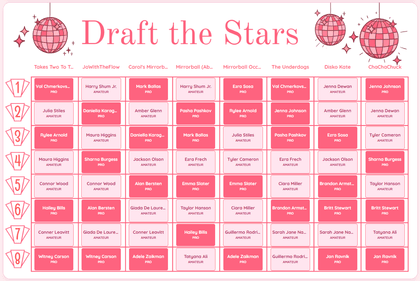
Draft the Stars
A custom Dancing with the Stars fantasy-draft application with a visual snake-draft board, locked team rosters, weekly scoring, elimination tracking, and live rankings.
-
Web Application
Sports Betting · 2026
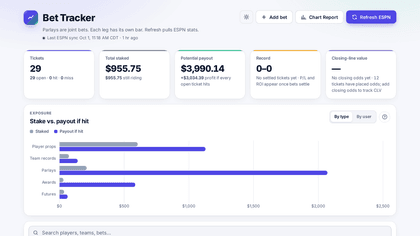
Bet Tracker
A season-long sports-bet tracker for player props, win totals, futures and parlays. It refreshes from ESPN every hour, scores each bet's pace, and tracks closing-line value.
-
Web Application

In development
Parcel Filter
A map tool that sorts Northwest Florida parcels by acreage, vacancy, zoning, flood zone, and utilities, using live public county data.
-
Mobile Web App

In development
Tree Survey App
An offline phone app that logs trees with averaged GPS and exports Civil 3D points, paired with a tree protection and mitigation calculator.
L-307 Projects
Projects
Things I make and sell through ZT, LLC: study and spreadsheet tools, and a children’s picture book series.
2 projects
-
Digital Products

Live on Gumroad
Digital products
Study guides and spreadsheet tools from civil work: PE exam prep, estimating and land development, and real estate investing analyzers.
-
Children’s Books

Book 1 in progress
STEM picture book series
Read-aloud picture books for ages 4–7 about how bridges, roads, and stormwater work, by Zachery A. Taylor and published by ZT, LLC.